Stroke is one of the leading causes of long-term disability in the UK, with upper limb impairment affecting approximately 80% of stroke survivors in the acute phase. The impact on arm and hand function can range from mild weakness to complete paralysis, and recovery trajectories vary enormously between individuals.
Understanding the Stages of Recovery
Upper limb recovery after stroke broadly follows a pattern progressing from flaccidity through spasticity to voluntary movement. Neuroplasticity — the brain’s ability to reorganise and form new connections — means that meaningful recovery is possible at any stage post-stroke. The greatest window of neuroplastic potential occurs in the first three to six months, often referred to as the “critical period.” During this time, intensive, repetitive, task-specific practice has the strongest evidence base for driving cortical reorganisation and functional recovery.
What Does the Evidence Say?
Task-specific training — practising real functional movements such as reaching, grasping, and releasing — is the cornerstone of upper limb rehabilitation. Constraint-Induced Movement Therapy (CIMT) involves restraining the unaffected arm to encourage intensive use of the affected limb. The landmark EXCITE trial demonstrated significant and durable improvements in arm function in people with mild to moderate upper limb impairment. Mirror therapy has been shown to improve motor function and reduce pain, particularly in the hand.
The Role of Home-Based Physiotherapy
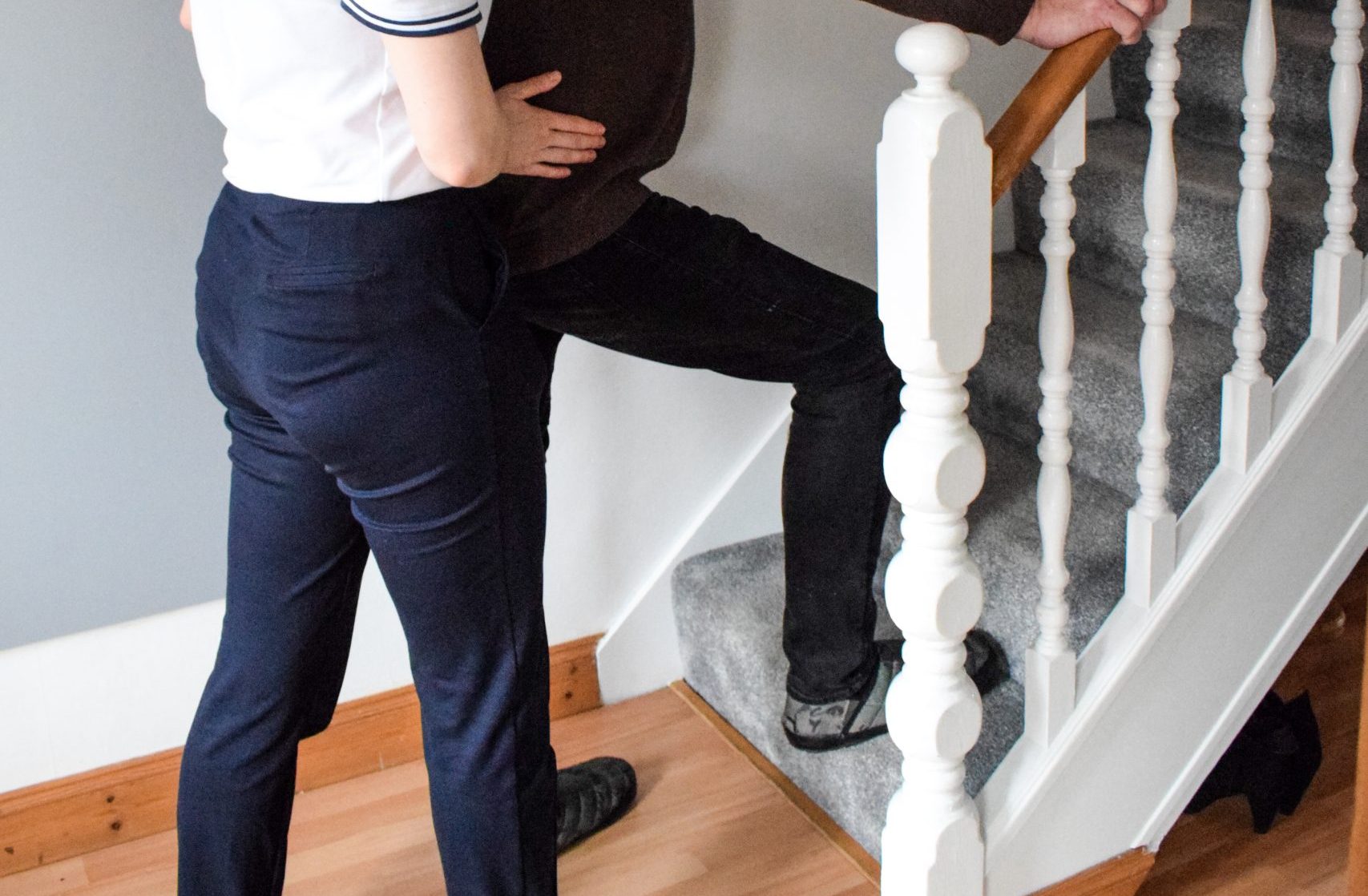
Receiving physiotherapy in your own home offers significant advantages. Practice can be immediately applied to the real tasks that matter most — making a cup of tea, fastening buttons, writing — in the environment where those tasks actually occur.
References
Pollock, A. et al. (2014). Interventions for improving upper limb function after stroke. Cochrane Database of Systematic Reviews, Issue 11. https://doi.org/10.1002/14651858.CD010820.pub2
Wolf, S.L. et al. (2006). Effect of constraint-induced movement therapy on upper extremity function 3 to 9 months after stroke: the EXCITE randomized clinical trial. JAMA, 296(17), 2095–2104. https://doi.org/10.1001/jama.296.17.2095
Thieme, H. et al. (2018). Mirror therapy for improving motor function after stroke. Cochrane Database of Systematic Reviews, Issue 7. https://doi.org/10.1002/14651858.CD008449.pub3
Cramer, S.C. et al. (2011). Harnessing neuroplasticity for clinical applications. Brain, 134(6), 1591–1609. https://doi.org/10.1093/brain/awr039